yardworks lawn mower owner’s manual
Yardworks Lawn Mower Owners Manual: A Comprehensive Guide

This manual provides essential guidance for Yardworks lawn mower operation, maintenance, and safety, covering models like the CLMA4820L2 and various Cub Cadet series.
Yardworks lawn mowers are designed for homeowners seeking reliable and efficient lawn care solutions. From manual push mowers ideal for smaller gardens, requiring physical effort, to more advanced models like the Toro 22 Recycler, Yardworks offers a diverse range to suit various lawn sizes and needs. This manual serves as a comprehensive resource for understanding and maintaining your Yardworks mower, ensuring optimal performance and longevity.
Whether you own a Yardworks model or a related brand like Cub Cadet, this guide will help you navigate assembly, operation, and troubleshooting. It references resources like PDF manuals for models such as the CLMA4820L2 and Transmatic series 700, emphasizing safe and effective lawn maintenance practices.
Safety Precautions
Prioritize safety when operating your Yardworks lawn mower. Always disconnect the spark plug wire before performing any maintenance, like blade inspection or sharpening, to prevent accidental starts. Wear appropriate safety glasses and sturdy footwear during operation and maintenance.
Never operate the mower if safety devices are damaged or missing. Be mindful of bystanders, especially children and pets, maintaining a safe operating distance. Avoid operating on steep slopes or in wet conditions. Refer to the full owner’s manual for detailed safety guidelines, ensuring responsible and hazard-free lawn care, as detailed in referenced manuals.
Understanding Your Yardworks Model
Familiarize yourself with your specific Yardworks lawn mower model. Yardworks offers a range of mowers, from manual push models ideal for smaller gardens to more powerful, self-propelled versions. Understanding the type – recycler, bagging, or side discharge – is crucial for optimal performance.
Refer to the model number, often found on the mower deck, to access the correct owner’s manual and parts diagrams. Knowing your mower’s capabilities and limitations, as outlined in manuals for similar brands like Cub Cadet and Toro, ensures safe and efficient operation.
Key Components and Their Functions
Your Yardworks mower comprises several key components working in unison. The engine provides power, while the cutting deck and blades are responsible for trimming the grass to the desired height. Controls, including levers, manage speed, blade engagement, and discharge options.
Understanding each component’s function – from the fuel system to the safety devices – is vital for proper operation and maintenance. Referencing parts diagrams, similar to those found for Transmatic lawn tractors, aids in identifying and understanding each element’s role within the system.
Engine Overview
The Yardworks lawn mower engine is the core power source, responsible for rotating the blades and driving the machine. It’s crucial to understand its basic operation, including the fuel and ignition systems; Regular maintenance, like oil changes, is paramount for longevity.

While specific engine types vary, common features include a carburetor, spark plug, and cooling fins. Proper ventilation is essential to prevent overheating. Familiarize yourself with emission control systems, ensuring compliance with environmental regulations, as detailed in related manuals.
Cutting Deck and Blades
The cutting deck houses the blades and directs airflow for efficient grass cutting. Yardworks mowers utilize various blade designs for mulching, bagging, or side discharge. Regularly inspect blades for damage – nicks, bends, or dullness – as these impact cutting performance and safety.

Maintaining blade sharpness is vital for a clean cut and healthy lawn. Always disconnect the spark plug before working on the blades. Proper blade balancing prevents excessive vibration, extending the mower’s lifespan and ensuring operator comfort.
Controls and Levers
Yardworks lawn mowers feature intuitive controls for ease of operation. Key levers manage functions like self-propel speed, cutting height adjustment, and blade engagement. Familiarize yourself with the location and operation of each control before use.
The throttle lever regulates engine speed, impacting power and fuel consumption. Safety levers, often found on the handle, must be engaged to start and maintain engine operation, preventing accidental activation. Understanding these controls ensures safe and efficient mowing.
Assembly Instructions
Before first use, careful assembly is crucial for optimal performance and safety. Begin by attaching the handle to the mower deck, ensuring secure fastening with provided hardware. Next, install the rear wheels, followed by the front wheels, verifying proper alignment.

Connect the grass catcher (if applicable), and double-check all bolts and connections for tightness. Refer to the detailed diagrams within this manual for visual guidance. Proper assembly guarantees a stable and reliable mowing experience.
Pre-Operation Checks

Prior to each use, perform essential checks to ensure safe and efficient operation. First, verify fuel and oil levels, adding as needed with the recommended types. Inspect the cutting blade for damage, sharpness, and secure attachment.
Confirm all safety devices, including the blade control lever and discharge chute, are functioning correctly. A pre-operation inspection minimizes risks and maximizes the lifespan of your Yardworks lawn mower, preventing potential issues during mowing.
Fuel and Oil Levels
Maintaining correct fuel and oil levels is crucial for optimal engine performance and longevity. Always use fresh, unleaded gasoline with a minimum octane rating of 87. Check the oil level using the dipstick before each use, adding oil as needed to maintain the ‘full’ mark.
Refer to your specific Yardworks model’s manual for the recommended oil type and capacity. Never overfill, as this can cause engine damage. Regularly check for leaks and address them promptly to prevent operational issues.
Blade Inspection
Regular blade inspection is paramount for a safe and clean cut. Before each use, always disconnect the spark plug wire to prevent accidental starting. Carefully examine the blades for signs of dullness, nicks, cracks, or bending.
A dull blade tears grass instead of cutting it, leading to an unhealthy lawn. Sharpen or replace damaged blades immediately. Ensure blades are securely attached and balanced to minimize vibration and prevent potential hazards during operation.
Safety Device Verification
Prior to each mowing session, meticulously verify the proper function of all safety devices. This includes the operator presence control (OPC) lever, ensuring the mower engine stops when released. Inspect the discharge chute deflector, confirming it’s securely fastened and directs discharge away from operators and bystanders.
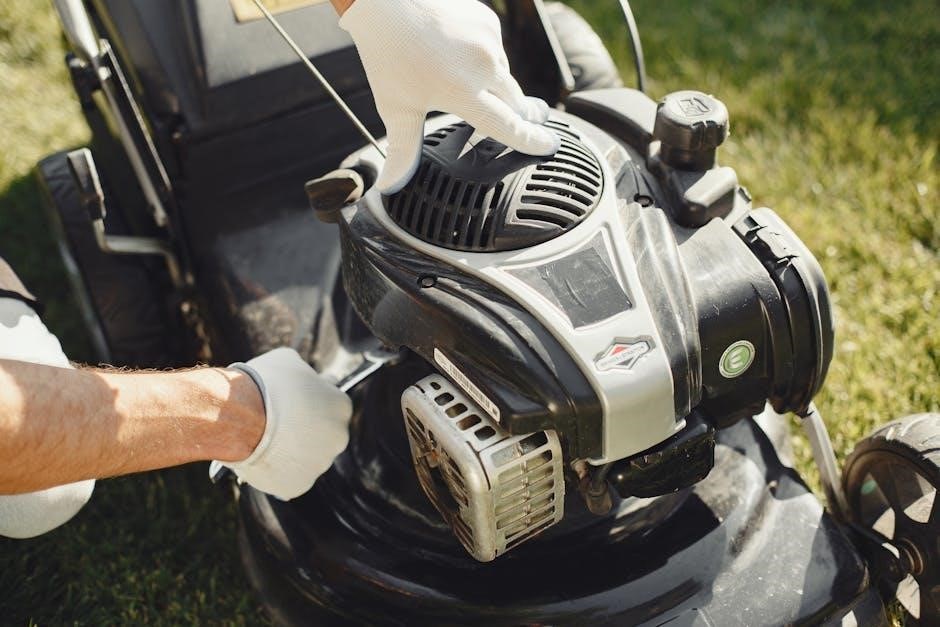
Also, check the blade brake mechanism for responsiveness. Never operate the mower with malfunctioning safety features; address any issues before starting. A functioning system is crucial for preventing serious injury.
Starting and Stopping the Engine
Before starting, ensure the blade is disengaged and the parking brake is set. Prime the engine as instructed – typically by pressing the primer bulb several times – and set the choke appropriately for cold starts. Engage the starter cord with a firm, controlled pull.
To stop, release the operator presence control (OPC) lever. Always allow the engine to completely stop before making adjustments or leaving the mower unattended. Disconnect the spark plug wire for extended periods or maintenance.
Operating Instructions
Begin mowing in a straight line, overlapping each pass slightly for a clean, even cut. Adjust the cutting height using the designated lever, selecting a suitable level for your lawn’s condition. Utilize mulching, bagging, or side discharge options as desired, ensuring proper attachment of accessories.
Maintain a consistent walking pace and avoid sharp turns. Regularly check for obstructions and reduce speed on uneven terrain. Prioritize safety by never operating the mower when others are nearby.
Adjusting Cutting Height
The cutting height is adjusted via a lever, typically located near the rear wheel, offering multiple positions for varying grass lengths; Before operation, select the desired height based on lawn conditions and personal preference – higher for longer grass, lower for a manicured look.
Ensure all wheels are set to the same height for an even cut. Regularly check the adjustment mechanism for proper function and secure locking. Avoid drastic height changes; adjust incrementally for optimal results.
Mulching, Bagging, and Side Discharge
Yardworks mowers offer versatile discharge options: mulching, bagging, and side discharge. Mulching finely chops grass, returning nutrients to the lawn. Bagging collects clippings for disposal, ideal for a pristine appearance;
Side discharge evenly distributes clippings, suitable for larger areas or taller grass. Switching between modes usually involves attaching/detaching a bag or utilizing a discharge chute. Always ensure proper attachment and secure locking before operation for safe and efficient mowing.
Mowing Techniques
Effective mowing involves overlapping each pass by a few inches to prevent scalping and ensure a consistent cut. Maintain a steady walking pace for even results. Varying mowing patterns each time prevents soil compaction and promotes healthy grass growth.
Avoid mowing wet grass, as it can clog the deck and lead to an uneven cut. For longer grass, raise the cutting height and mow in stages, gradually lowering it to the desired level. Prioritize safety and awareness of surroundings during operation.
Maintenance Schedule
Regular maintenance extends your Yardworks lawn mower’s life and ensures optimal performance. Frequent cleaning after each use prevents debris buildup, crucial for efficient operation. Blade sharpening, ideally twice a season, delivers a clean cut and healthy lawn.
Oil changes, following the manufacturer’s recommendations, are vital for engine longevity. Inspect belts and filters periodically, replacing them as needed. Adhering to this schedule minimizes breakdowns and maximizes mowing efficiency throughout the season.
Regular Cleaning
Consistent cleaning is paramount for maintaining your Yardworks lawn mower’s performance and preventing premature wear. After each use, disconnect the spark plug and remove accumulated grass clippings from the cutting deck.
Pay close attention to the underside, ensuring no debris obstructs blade movement. Wipe down the exterior with a damp cloth, avoiding harsh chemicals. A clean mower operates more efficiently and extends its lifespan, reducing the need for costly repairs.
Blade Sharpening and Replacement
Maintaining sharp blades is crucial for a clean cut and healthy lawn. Regularly inspect blades for dullness or damage; a noticeable tear or significant wear indicates replacement is necessary. Sharpening can be done professionally or with a blade sharpening kit, always balancing the blade afterward.
When replacing, ensure the new blade is compatible with your Yardworks model. Always disconnect the spark plug before handling blades, and follow torque specifications during installation for safe operation.
Oil Changes
Regular oil changes are vital for engine longevity and performance. Consult your Yardworks model’s manual for the recommended oil type and change interval – typically after every 25-50 hours of use, or annually. Always perform oil changes with a warm, but not hot, engine.
Drain the old oil carefully, dispose of it responsibly at a recycling center, and refill with the correct amount of new oil. Verify the oil level with the dipstick before operation, ensuring optimal lubrication.
Troubleshooting Common Issues
Encountering problems? This section addresses frequent concerns. If the engine won’t start, check fuel levels, the spark plug, and ensure the safety bail is engaged. An uneven cut often indicates dull or damaged blades requiring sharpening or replacement.
Excessive vibration could stem from loose components or an unbalanced blade; inspect and tighten accordingly. Always disconnect the spark plug before performing any maintenance or inspection to prevent accidental starting.

Engine Won’t Start
A non-starting engine is a common issue. First, verify sufficient fuel in the tank and ensure the fuel shut-off valve is open. Check the spark plug for fouling or damage; a replacement may be necessary. Confirm the spark plug wire is securely connected.
Also, ensure the safety bail handle is fully engaged, as this activates the ignition system. Inspect the air filter for obstructions. If problems persist, consult a qualified technician for further diagnosis.
Uneven Cut
An uneven cut often indicates blade issues. Begin by inspecting the blade for dullness, damage (nicks or bends), or improper installation. A dull blade tears grass instead of cutting cleanly. Ensure the blade is securely fastened with the correct torque specification.
Also, verify the cutting deck is level and free of obstructions like accumulated grass clippings. Adjust the cutting height to a suitable setting for your lawn conditions. Consistent overlap during mowing passes is crucial.
Excessive Vibration
Significant vibration signals a potential problem requiring immediate attention. First, check the blade for damage – bends or imbalances will cause noticeable shaking. Ensure the blade is correctly installed and tightened to the manufacturer’s specifications. Loose components, like the blade adapter or engine mounting bolts, can also contribute.
Inspect the engine for any loose parts or worn bearings. If the vibration persists, discontinue use and consult a qualified service technician for a thorough inspection and repair.
Winter Storage Preparation
Proper winterization safeguards your Yardworks lawn mower against damage during prolonged inactivity. Begin by draining all fuel from the tank and carburetor to prevent gumming and corrosion. Add fuel stabilizer if complete draining isn’t possible. Change the engine oil, ensuring old oil is fully removed.
Clean the mower deck thoroughly, removing grass clippings and debris. Inspect blades and sharpen or replace as needed. Store the mower in a dry, sheltered location, covered to protect it from dust and the elements.

Parts Diagrams and Ordering Information
Locating replacement parts for your Yardworks lawn mower is simplified through detailed parts diagrams. These diagrams, often available online or within supplemental manuals, illustrate component placement and provide corresponding part numbers for accurate identification.
To order parts, visit the Yardworks website or contact authorized service centers. Have your mower’s model number readily available to ensure compatibility. Transmatic lawn tractor parts manuals are also available, aiding in identifying specific components.
Warranty Information
Your Yardworks lawn mower is protected by a limited warranty against defects in materials and workmanship. The warranty period varies depending on the specific model and components, typically ranging from one to three years from the original purchase date.
This warranty covers parts and labor for repairs or replacements necessitated by manufacturing flaws. It does not cover damage resulting from misuse, improper maintenance, or normal wear and tear. Proof of purchase is required for all warranty claims.
Contacting Yardworks Customer Support
For assistance with your Yardworks lawn mower, or to address any questions regarding operation, maintenance, or warranty claims, several support channels are available. You can reach Yardworks customer support through their official website, which often features a comprehensive FAQ section and online chat functionality;
Alternatively, direct contact can be made via telephone during business hours. Dedicated representatives are prepared to assist with troubleshooting, parts inquiries, and service requests. Retain your model number for efficient support.
Understanding Emission Control Systems
Yardworks lawn mowers are equipped with emission control systems designed to reduce harmful pollutants released into the atmosphere, adhering to environmental regulations. These systems typically include components like the carburetor, exhaust muffler, and potentially catalytic converters in some models.
Proper maintenance of these components is crucial for optimal performance and continued emission compliance. Tampering with or disabling these systems is illegal and can void your warranty. Refer to the maintenance schedule for specific instructions.
Recycling and Disposal Information
Responsible disposal of your Yardworks lawn mower and its components is vital for environmental protection. Do not simply discard the unit with regular waste; explore local recycling options for metal parts, plastics, and the engine.
Used oil and fuel must be disposed of at designated collection centers, never poured down drains or onto the ground. Check with your local municipality for specific recycling guidelines and hazardous waste disposal programs. Consider donating a working mower to extend its lifespan.