beginner’s guide to japanese joinery pdf
Japanese Joinery, a captivating art form, blends precision, aesthetics, and functionality; explore comprehensive guides like “Japanese Joinery” for detailed illustrations.
Beginner’s guides, often available as PDFs, showcase traditional techniques, offering a pathway to understanding this ancient craft and its enduring appeal.
Resources like online forums and communities provide support, while books and tutorials help unlock the secrets of Japanese woodworking for enthusiasts.
What is Japanese Joinery?
Japanese Joinery (Kumiki) is a wood joining technique that, traditionally, makes use of minimal to no fasteners – nails, screws, or glue. It’s a meticulous art form focused on precisely cut and fitted pieces of wood, relying on the wood’s natural strength and the ingenuity of the joiner.
Unlike Western joinery which often conceals joinery, Japanese Joinery frequently showcases the joints themselves as a design element, highlighting the skill and artistry involved. Many beginner’s guides, often found as PDFs, emphasize this aesthetic aspect.
These guides detail how interlocking pieces create robust structures, demonstrating the principles of tension and compression. Learning resources, like “Japanese Joinery” books, illustrate the beauty and functionality of these joints, offering a pathway to mastering this ancient craft. It’s a testament to sustainable building practices.
Historical Significance of Japanese Woodworking
Japanese woodworking boasts a rich history, deeply intertwined with the nation’s religious architecture, particularly Buddhist temples. These structures, often built without nails, demanded sophisticated joinery techniques, evolving over centuries.
The development of specialized tools and the refinement of skills were crucial, passed down through generations of artisans. Beginner’s guides, including those available as PDFs, often trace this lineage, highlighting the influence of Zen Buddhism on the pursuit of perfection.
Historically, wood was a precious resource in Japan, fostering a culture of conservation and meticulous craftsmanship. Resources like “Japanese Joinery” showcase how this scarcity drove innovation. These techniques weren’t merely functional; they were imbued with spiritual and philosophical meaning, reflecting harmony with nature.
Why Learn Japanese Joinery?
Learning Japanese Joinery offers a unique blend of artistic expression, problem-solving, and mindful practice. It cultivates patience, precision, and a deep appreciation for natural materials – skills valuable beyond woodworking itself.
Beginner’s guides, often found as PDFs, provide accessible entry points, demystifying complex techniques and fostering a sense of accomplishment. This craft encourages a slower, more deliberate approach to creation, contrasting with modern mass production.
Furthermore, understanding Japanese Joinery unlocks a deeper connection to Japanese culture and history. Resources like online tutorials and communities offer support and inspiration, allowing you to build beautiful, durable pieces while embracing a time-honored tradition.

Essential Tools for Beginners
Essential tools, detailed in beginner’s guides and PDFs, include nokogiri (saws), kanna (planes), and nomi (chisels) – foundational for mastering joinery techniques.
Hand Saws (Nokogiri)
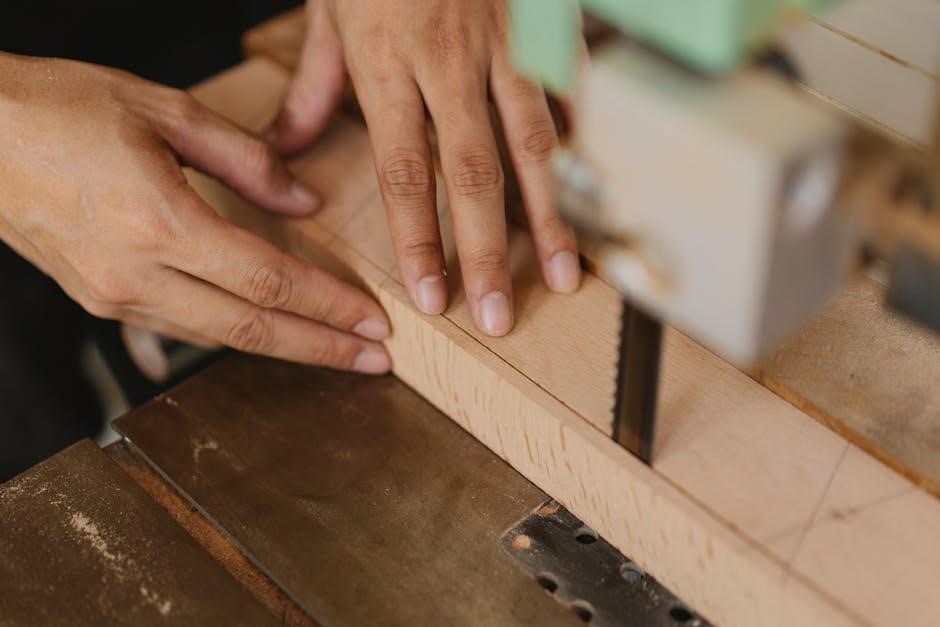
Nokogiri, or Japanese hand saws, are fundamental to joinery, differing significantly from Western saws due to their unique pull-stroke cutting action. Beginner’s guides, often found as PDFs, emphasize selecting the right saw for the task, with various blade lengths and tooth patterns available.
Ryoba saws, featuring both crosscut and rip teeth, are versatile for initial learning, while kataba saws specialize in either crosscut or rip cuts for refined work. Understanding the tooth geometry – the number of teeth per inch (TPI) – is crucial for achieving clean, precise cuts.
Proper technique involves maintaining a consistent angle and using gentle pressure during the pull stroke, allowing the saw to efficiently remove material. PDF resources often illustrate correct body positioning and grip for optimal control and minimizing fatigue.
Planes (Kanna)
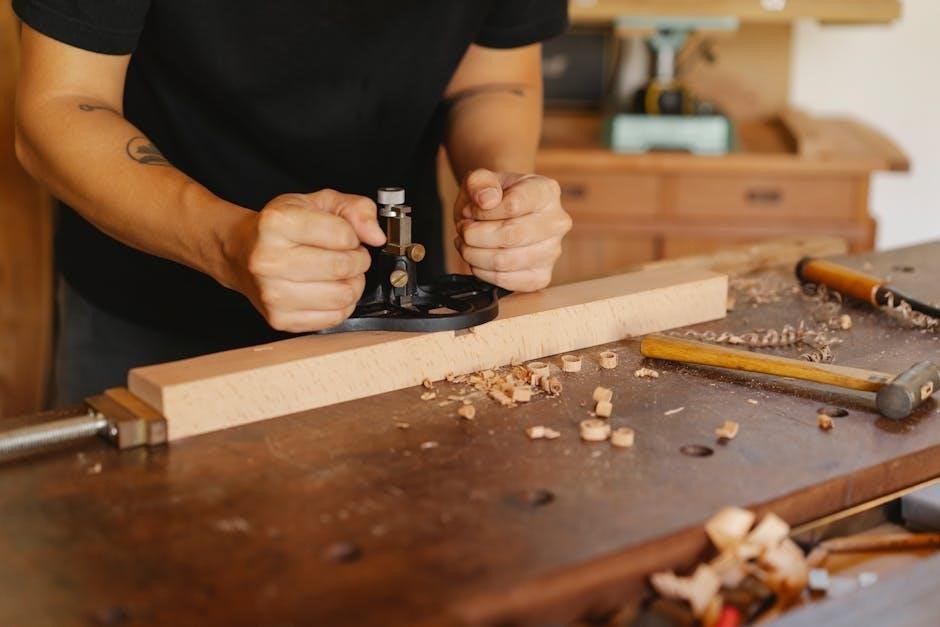
Kanna, Japanese planes, are essential for refining surfaces and achieving precise fits in joinery. A beginner’s guide, frequently available as a PDF, highlights the differences between kanna and Western planes, focusing on the blade’s bevel angle and the pull-stroke action.
Different kanna types exist, including shikitori kanna for general smoothing and atsukai kanna for rough stock removal. Learning to sharpen the blade correctly is paramount, requiring patience and practice with whetstones.
PDF resources often detail the proper technique for adjusting the blade depth and maintaining a consistent shaving thickness. Mastering the kanna allows for incredibly fine adjustments and a beautifully smooth finish, crucial for tight-fitting joints.
Chisels (NomI)
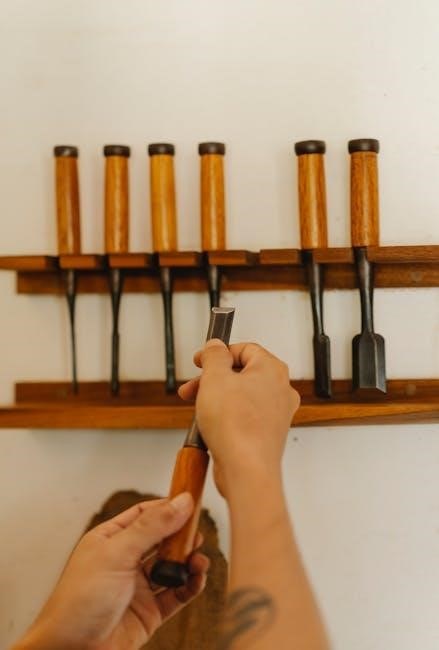
NomI, Japanese chisels, are renowned for their exceptional sharpness and durability, forming a cornerstone of traditional joinery. A beginner’s guide, often found as a downloadable PDF, emphasizes the importance of understanding the different chisel types – Irogami for delicate work and Kataba for general use.
These guides detail proper sharpening techniques, utilizing water stones to achieve a razor-edge. Maintaining the bevel angle is critical for clean cuts and precise joinery. Learning to control the chisel with both hands ensures accuracy and safety.
PDF resources frequently illustrate how to use chisels for various tasks, from creating mortises to refining tenon shoulders, unlocking the potential for intricate and robust wood connections.
Measuring Tools (Sumigawa & Shaku)
Sumigawa and Shaku are fundamental Japanese measuring tools, crucial for the precision demanded in joinery. A beginner’s guide, often available as a PDF, explains the traditional system – the shaku being approximately one foot. Understanding these units is vital for interpreting plans and achieving accurate dimensions.
These guides highlight the use of sumigawa, sliding calipers, for marking precise measurements, and the shaku for overall length checks. Accuracy is paramount; even slight deviations can compromise joint integrity.
PDF resources often include conversion charts to metric or imperial units, aiding modern woodworkers. Mastering these tools unlocks the ability to replicate traditional designs and execute complex joinery with confidence.
Fundamental Joinery Techniques
Beginner’s guides, often in PDF format, emphasize wood selection, grain direction, and precise cutting as cornerstones of Japanese joinery’s success.
These resources detail foundational skills, enabling aspiring woodworkers to build a solid base for more complex techniques.
The Importance of Wood Selection
Wood selection is paramount in Japanese joinery, differing significantly from Western approaches. Beginner’s guides, including those available as PDFs, consistently stress understanding wood properties.
Different species offer varying strengths, grains, and workability, directly impacting joint integrity and aesthetic appeal. Softwoods like cedar (Sugi) and cypress (Hinoki) are favored for their ease of carving and beautiful fragrance, often used in interior work.
Hardwoods, such as zelkova (Keyaki) and cherry (Yamazakura), provide greater durability and are preferred for structural components. A PDF guide will illustrate how to identify wood grain, crucial for predicting behavior during cutting and joining. Choosing the right wood ensures longevity and showcases the natural beauty inherent in the craft.
Understanding Grain Direction
Grain direction is fundamental to successful Japanese joinery, and a core tenet emphasized in beginner’s guides, often found as PDFs. Recognizing grain orientation prevents splitting and ensures strong, lasting joints.
Wood doesn’t simply grow straight; variations in grain angle impact how it reacts to tools and stresses. Understanding long, short, and diagonal grain is crucial. Cutting against the grain can cause tear-out, while working with it yields clean cuts.
PDF guides often include diagrams illustrating grain patterns and their implications. Mastering this skill allows for precise cuts and minimizes the risk of wood failure. Careful observation and practice are key to interpreting grain and adapting techniques accordingly, resulting in beautiful and structurally sound joinery.
Basic Cutting Techniques
Basic cutting techniques form the foundation of Japanese joinery, and are thoroughly detailed in many beginner’s guides available as PDFs. Mastering these skills is essential before tackling complex joints.
Key techniques include straight cuts using a nokogiri (hand saw), precise chiseling with a nomi, and smoothing surfaces with a kanna (plane). PDF guides emphasize proper stance, grip, and blade angle for optimal control.
Practice consistent pressure and follow the grain to avoid tear-out. Learning to sharpen tools is paramount, as a dull blade requires more force and increases the risk of errors. Start with simple practice cuts on scrap wood before attempting joinery, building muscle memory and confidence.
Common Japanese Joinery Joints
PDF guides detail essential joints like kusabi (wedge), kanawa (through-wedged), shiire, and arigata (dovetail) – foundational for Japanese joinery projects.
Understanding these techniques, often visually explained, unlocks the ability to create strong, beautiful, and lasting wooden connections.
Kusabi – Wedge Joint
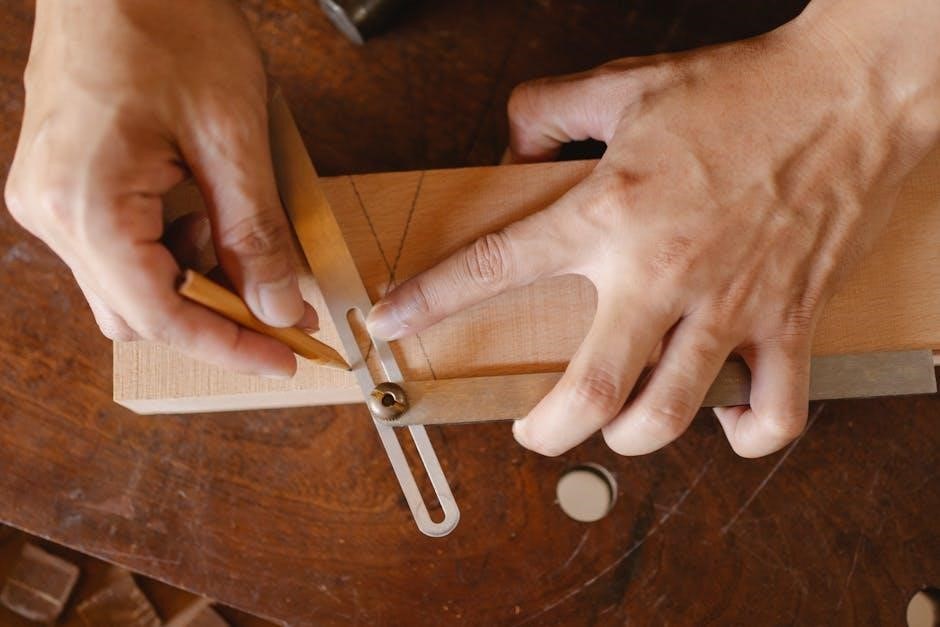
The Kusabi joint, a cornerstone of Japanese joinery, is a remarkably simple yet incredibly effective method for securing tenons within mortises. Many beginner’s guides, often found as PDFs, dedicate significant attention to mastering this fundamental technique.
Essentially, it involves driving a precisely shaped wooden wedge into a split in the tenon after it’s inserted into the mortise. This expansion creates a tight, interlocking fit, eliminating the need for glue in many applications.
PDF resources typically illustrate the precise angles and dimensions required for the wedge, emphasizing the importance of a snug fit. Learning to accurately create and seat the kusabi is crucial, as it forms the basis for more complex joints. It’s a testament to the ingenuity of Japanese woodworking.
Kanawa – Through-Wedged Joint
The Kanawa joint, or through-wedged joint, represents a step up in complexity from the Kusabi, yet remains accessible to beginners with guidance from Japanese joinery PDF resources. These guides often detail the process with clear illustrations.
Unlike the Kusabi, the wedge in a Kanawa joint passes entirely through the tenon, creating a powerful clamping force. This is achieved by carefully splitting the tenon and driving one or more wedges through it, expanding it within the mortise.
Beginner’s guides emphasize precise mortise and tenon fitting, as the joint’s strength relies on this accuracy. PDFs will showcase how to properly shape the wedges for optimal expansion and a secure, glue-less connection – a hallmark of traditional Japanese woodworking.
Shiire – Through-Haunched Joint
The Shiire joint, a through-haunched joint, introduces a clever method for securing pieces while concealing the joinery. Beginner’s guides, particularly those in PDF format, often dedicate significant attention to this technique due to its visual appeal and structural integrity.
This joint features a tenon with a shoulder, or “haunch,” that fits into a corresponding recess in the mortise. A wedge, driven through the tenon, locks the joint securely. Japanese joinery PDF resources highlight the importance of precise haunch placement;
PDF guides will illustrate how the haunch prevents racking and adds stability. Mastering the Shiire demonstrates a growing understanding of Japanese woodworking principles, offering a beautiful and robust connection without visible fasteners.
Arigata – Dovetail Joint
The Arigata joint, a Japanese dovetail, represents a pinnacle of woodworking precision and strength. Beginner’s guides, frequently available as PDF downloads, often present this joint as a challenging yet rewarding project. It’s a testament to the skill of the craftsman.
Unlike Western dovetails, the Arigata features a unique, interlocking shape, creating an exceptionally strong bond. Japanese joinery PDF resources emphasize the importance of accurate angles and tight fits for optimal performance.
PDF guides will detail the meticulous process of cutting the dovetails and pins, ensuring a seamless connection. Successfully executing an Arigata joint signifies a significant milestone in learning Japanese woodworking, showcasing dedication and mastery.

Advanced Joinery Techniques
Advanced techniques, detailed in Japanese joinery PDF guides, build upon fundamentals; Kakushi-tsugi and Kigumi showcase artistry and structural ingenuity.
These complex joints demand precision, patience, and a deep understanding of wood behavior, elevating craftsmanship to an exceptional level.
Hidden Joints (Kakushi-tsugi)
Kakushi-tsugi, meaning “hidden joinery,” represents a pinnacle of Japanese woodworking skill, often explored in detailed beginner’s guides and Japanese joinery PDF resources.
This technique creates nearly invisible joints, showcasing a seamless aesthetic and remarkable structural integrity. Unlike exposed joinery, Kakushi-tsugi prioritizes concealing the connection, demanding exceptional precision in cutting and fitting.
Typically used for repairing or extending existing wood, it involves meticulously shaping the wood to interlock, then carefully gluing and clamping. Mastering this requires a deep understanding of wood grain and precise tool work.
PDF guides often illustrate various Kakushi-tsugi variations, from simple extensions to complex repairs, providing step-by-step instructions for aspiring woodworkers. It’s a testament to the Japanese philosophy of valuing both function and beauty.
Interlocking Joints (Kigumi)
Kigumi, a sophisticated form of Japanese joinery, utilizes intricate interlocking components, often detailed in comprehensive beginner’s guides and accessible Japanese joinery PDF resources.
Unlike joints relying heavily on adhesives, Kigumi depends on the precise shaping and fitting of wood pieces to create robust, self-supporting structures. Historically employed in temple and shrine construction, it showcases remarkable engineering.
These joints distribute weight effectively, resisting seismic activity and ensuring longevity. PDF guides frequently illustrate complex Kigumi patterns, demonstrating how seemingly simple cuts create powerful connections.
Learning Kigumi demands patience, accuracy, and a thorough understanding of wood behavior. It’s a challenging but rewarding pursuit, offering a glimpse into the ingenuity of traditional Japanese carpentry.
Complex Roof Framing Joints
Complex roof framing joints represent the pinnacle of Japanese joinery skill, often meticulously documented in detailed beginner’s guides and comprehensive Japanese joinery PDF resources.
These joints, crucial for supporting heavy tiled roofs, demonstrate an extraordinary understanding of structural mechanics and wood’s natural properties. They’re designed to withstand significant loads and resist movement over centuries.
PDF guides frequently showcase the intricate cuts and precise angles required for these connections, highlighting the importance of accurate measurement and execution. Kigumi principles often underpin these roof structures.
Mastering these joints requires advanced woodworking knowledge and experience. Studying historical examples and utilizing detailed diagrams from available resources is essential for aspiring joiners.
Resources for Learning
Beginner’s guides, including readily available Japanese joinery PDF downloads, offer foundational knowledge. Explore online tutorials, books, and forums for deeper understanding.
These resources provide visual aids and step-by-step instructions, accelerating your learning journey into this beautiful craft.
Recommended Books on Japanese Joinery
For newcomers, several books serve as excellent starting points, often complementing downloadable Japanese joinery PDF guides. “Japanese Joinery” itself, showcasing techniques with detailed photography, is highly recommended for visual learners.
Consider exploring titles focusing on fundamental woodworking skills alongside joinery-specific texts. These provide a broader understanding of wood behavior and preparation.
Look for books that clearly illustrate joint construction, offering step-by-step instructions and diagrams. Some resources delve into the historical context, enriching your appreciation for the craft.
Don’t overlook books that emphasize tool selection and maintenance, crucial for successful joinery. Combining physical books with free PDF resources creates a well-rounded learning experience, fostering both theoretical knowledge and practical skills.
Online Tutorials and Courses
Supplementing a beginners guide to Japanese joinery PDF, numerous online resources offer dynamic learning experiences. Platforms host video tutorials demonstrating techniques, from basic cuts to complex joint construction.
Many skilled woodworkers share their expertise through online courses, providing structured lessons and personalized feedback. These courses often cater to various skill levels, including absolute beginners.
YouTube channels dedicated to woodworking frequently feature Japanese joinery content, offering free access to valuable demonstrations and insights.
Explore websites offering downloadable plans and diagrams, allowing you to practice joints independently. Combining PDF guides with interactive online learning accelerates skill development, fostering a deeper understanding of this intricate craft.
Japanese Joinery PDF Guides
Beginner’s guides to Japanese joinery in PDF format are invaluable resources, offering a concentrated learning experience. These guides typically detail essential tools, fundamental techniques, and common joinery joints with clear illustrations.
Many PDFs break down complex processes into manageable steps, making them ideal for self-paced learning. They often include detailed diagrams showcasing grain direction and precise cutting angles.
Searching online reveals a variety of free and paid PDF guides, catering to different learning styles and budgets. Look for guides that emphasize safety practices and proper tool maintenance.
Utilizing a PDF alongside video tutorials creates a synergistic learning environment, reinforcing concepts and enhancing practical skill development. These guides serve as a portable reference for any woodworking enthusiast.
Japanese Joinery Communities and Forums
Online communities and forums are essential for beginners navigating Japanese joinery. These platforms offer a space to ask questions, share projects, and receive feedback from experienced practitioners;
Many forums host discussions on beginner’s guides, including recommendations for PDF resources and tool selections. Members often share their own interpretations and modifications of techniques.
Active communities provide a supportive environment for troubleshooting challenges and gaining insights into nuanced aspects of the craft. They foster a collaborative learning experience.
Searching for “Japanese Joinery forum” or related keywords will reveal numerous online groups. Engaging with these communities accelerates skill development and expands your knowledge base.

Applying Japanese Joinery to Projects
Beginner projects, like simple boxes, utilize techniques from PDF guides, fostering skill development. Applying learned joinery enhances project quality and understanding.
Traditional tables offer a more complex challenge, building upon foundational knowledge gained from introductory resources and practical application.
Small Project Ideas for Beginners
Embarking on Japanese joinery requires starting with manageable projects. A fantastic resource for these initial endeavors is a beginner’s guide in PDF format, offering clear instructions and visual aids. Consider crafting a small, simple tray – utilizing basic cuts and perhaps a single kusabi (wedge) joint.
Another excellent starting point is a miniature shrine, or a small wooden box. These projects allow you to practice fundamental techniques like accurate measuring, precise cutting, and careful fitting. Focus on mastering the kanawa joint, a through-wedged joint, which is relatively straightforward yet demonstrates core principles.
Remember to prioritize accuracy and patience. These small projects aren’t about speed; they’re about building a solid foundation in the art of Japanese woodworking. Utilize the PDF guide frequently, referencing diagrams and step-by-step instructions as needed. Success with these initial projects will build confidence and prepare you for more complex joinery challenges.
Building a Simple Wooden Box
Constructing a simple wooden box is an ideal project for beginners in Japanese joinery, perfectly complemented by a detailed beginner’s guide PDF. Begin by carefully selecting your wood, ensuring straight grain and minimal knots. The box’s sides can be joined using the kanawa – a through-wedged joint – offering a secure and visually appealing connection.
The PDF guide will illustrate precise measurements and cutting angles. Focus on achieving tight-fitting joints; this is paramount in Japanese woodworking. Practice dry-fitting the pieces repeatedly before applying any adhesive (traditionally, none is used!).
Once assembled, refine the box with hand planes (kanna) for smooth surfaces. This project reinforces fundamental skills: accurate cutting, precise joinery, and careful finishing. A well-crafted box demonstrates mastery of basic techniques and serves as a rewarding first accomplishment.
Creating a Traditional Japanese Table
Building a traditional Japanese table presents a more ambitious, yet achievable, project for those progressing beyond basic joinery, aided significantly by a comprehensive beginner’s guide PDF. The table’s legs and frame often utilize arigata – dovetail joints – known for their strength and aesthetic appeal. A detailed PDF will illustrate the complex angles and precise cuts required for successful execution.
Focus on mastering the kigumi interlocking techniques for the table’s frame, ensuring a stable and visually harmonious structure. Accurate measurements and careful wood selection are crucial.
The PDF guide should emphasize the importance of grain direction for optimal strength and stability. Finishing involves smoothing surfaces with kanna planes and applying a natural oil finish, showcasing the wood’s beauty. This project elevates skills and embodies Japanese woodworking principles.
Safety Considerations
Prioritize safety! A beginner’s guide PDF should detail proper tool maintenance, safe practices, and essential personal protective equipment for woodworking success.
Sharp tools are safer; learn honing techniques.
Proper Tool Maintenance
Maintaining Japanese tools is paramount for safety and achieving clean, precise joinery. A comprehensive beginner’s guide PDF will emphasize regular honing of blades – kanna planes and nomi chisels require frequent sharpening to maintain their exceptional edge.
Hand saws (nokogiri) also benefit from consistent attention, ensuring teeth are properly set and sharpened. Proper storage is crucial; protect blades from rust with camellia oil (tsubaki abura) and store tools in a dry environment.
Regular inspection for damage – cracks in handles, loose fittings – is vital. A well-maintained tool is not only safer but also a joy to use, enhancing the overall woodworking experience and longevity of your investment.
Safe Woodworking Practices
Prioritizing safety is essential when learning Japanese joinery. A beginner’s guide PDF should stress the importance of a stable work area and proper body positioning to avoid strain. Always work with sharp tools – dull tools require more force and are more prone to slipping.
Focus and concentration are key; avoid distractions while using tools. Understand the grain direction of the wood to prevent splitting or tear-out. Secure workpieces firmly with clamps or a vise before cutting or chiseling.
Never reach over a blade, and always cut away from your body. Practice controlled movements and avoid rushing. A mindful approach minimizes risks and fosters a rewarding woodworking experience.
Personal Protective Equipment
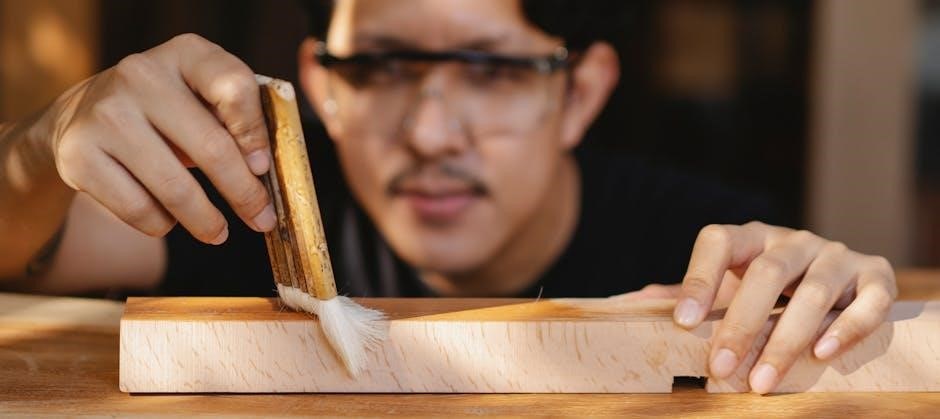
A comprehensive beginner’s guide to Japanese joinery PDF must emphasize the necessity of Personal Protective Equipment (PPE). Safety glasses are paramount, shielding your eyes from flying wood chips and debris generated during sawing, chiseling, and planing.
A dust mask or respirator is crucial to protect your lungs from fine wood dust, especially when working with certain wood species. Consider finger guards or thumb protectors to prevent cuts while using hand tools.
Work gloves can enhance grip and provide a degree of protection, but ensure they don’t impede dexterity. Proper attire, avoiding loose clothing, completes the safety ensemble, fostering a secure and enjoyable learning process.